Best Pellet Smokers
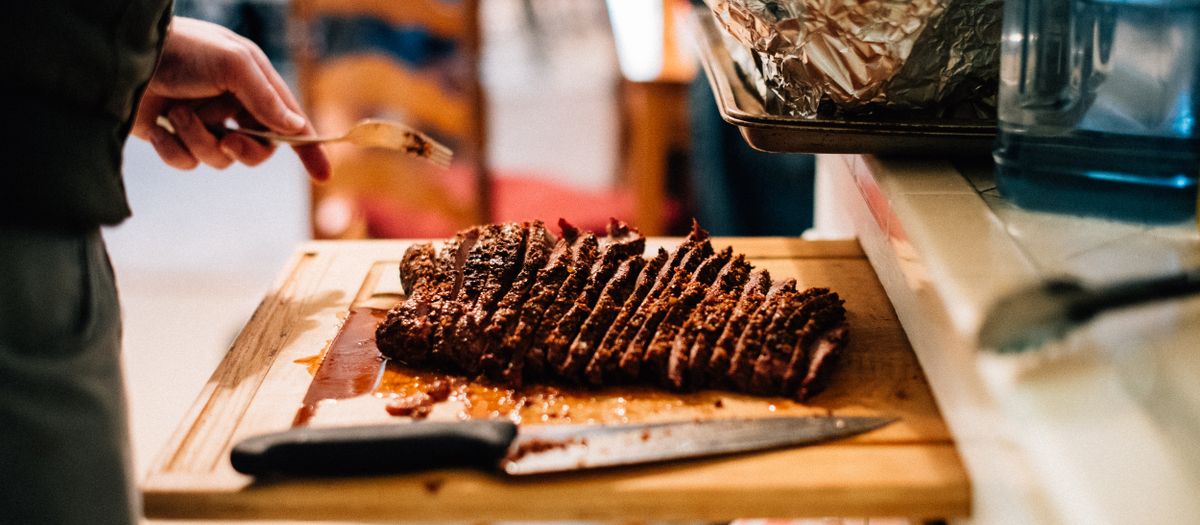
The best pellet smoker is the one sized to your cooks — enough grate area for the crowd you feed and enough hopper for the cook you run. This guide compares pellet grills by size tier — compact and portable, mid-size family, and large entertainer — on the specs that decide the fit: cooking area (square inches), hopper capacity, temp range and controller. The verified picks appear in each slot once real product data is in.
A brisket does not care about the headline price — it cares about grate area, hopper hours and how cold the night gets. So read the sizing logic first, then look at the picks: best overall, best for big crowds, best compact/portable, best value and best WiFi/smart.
Specs verified against manufacturer details and current Amazon listings — no hands-on testing claims. Grate area, hopper capacity and temp-range figures are taken from published manufacturer specs; burn-time and capacity estimates are derived from those specs and stated cook conditions.
How to choose a pellet smoker by size
Almost every regret a first-time buyer has comes down to one number they did not look at hard enough: capacity. Not the headline price, not the badge on the lid — the grate area you cook on and the hopper hours you carry. On my own pit, the lesson that stuck was the cold winter night my first, undersized grill ran the hopper dry at 3am with a brisket still hours from done. So before any pick, the honest order of operations is: figure out the biggest realistic cook you will run, size the grate to it, then make sure the hopper carries hours to spare for the worst night you will cook on.
Pellet grills sort cleanly into three size tiers, and matching the tier to your crowd is most of the decision. The picks below are organised the same way — best overall, best for big crowds, best compact/portable, best value and best WiFi/smart — so you can shop the tier that fits your backyard rather than the one with the loudest marketing.
Compact & portable: roughly 250–450 sq in, 8–12 lb hopper
A compact pellet grill is built for balconies, small patios, tailgates and weeknight cooks for two. The physics of low-and-slow are the same as a big cooker — a good compact unit still holds a steady 225°F — so the only thing you give up is room. With around 250–450 square inches of grate you can run a couple of racks of ribs, a chicken or two, or a small pork shoulder. The honest limit is the full-size brisket and the crowd: a packer brisket wants real estate, and a small hopper means a long cook needs babysitting and refills. Spec-by-spec, an 8–12 lb hopper at 225°F burns through in roughly 4–10 hours depending on the night, so a compact unit is a great second grill or a fine first grill for a small household — just not the tool for an overnight, hands-off cook.
Mid-size family: roughly 450–700 sq in, 18–20 lb hopper
This is the tier most backyard cooks should buy first. Around 450–700 square inches feeds a family and a few guests, fits a brisket or two pork shoulders, and an 18–20 lb hopper carries the hours a long cook needs. Spec-by-spec, a 20-lb hopper at 225°F runs roughly 12–18 hours in mild weather, so for an overnight brisket you have margin in three seasons out of four — and in deep cold you top it up once and still sleep. A mid-size grill with a PID controller is the sweet spot of grate area, hopper hours and price, which is exactly why it anchors the “best overall” slot.
Large entertainer: roughly 700–1,000+ sq in, 20–24+ lb hopper
If you cook for crowds, run multiple briskets at once, or you are the house that hosts, the large tier earns its footprint. Past 700 square inches you can fit two packers side by side, or a brisket plus ribs plus sides, without playing grate Tetris. The bigger cabinet costs a little more pellet to bring up to temp, but the per-cook running cost is driven by set temperature, ambient cold and cook length far more than by grate size — so a big grill is not dramatically more expensive to run, it just refuses to be the bottleneck. With a 22–24 lb hopper you get the most overnight margin of any tier: a cold-night brisket that would run a small hopper dry has hours to spare here.
Grate area: how many square inches do you actually need?
Grate area is the spec that decides how much you can cook at once, and it is the one most people under-buy. A useful rule of thumb is roughly 72 square inches per person for a mixed cook, which is why a 450–600 sq in grate comfortably feeds a small family and a 700–900 sq in grate handles a family that entertains. Whole cuts change the math: a full packer brisket can occupy 200–300 square inches on its own once you account for the space around it, and racks of ribs eat room fast when laid flat. The practical takeaway is to size to your biggest realistic cook, not your average one — it is far cheaper to own grate area you occasionally use than to discover on the day of the party that the brisket and the ribs will not both fit. The cook-capacity calculator turns your typical cook — briskets, racks of ribs, number of guests — into a required grate area so you do not have to guess.
Hopper capacity: will it run dry overnight?
Hopper capacity is the spec that decides whether a long cook survives, and it is pure arithmetic. A pellet grill burns roughly 1–3 lb of pellets per hour, and that rate climbs with set temperature and — this is the part that catches people — with cold ambient weather, because the grill works harder to hold its setpoint against the night. Spec-by-spec, a 20-lb hopper at 225°F runs about 12–18 hours in mild conditions, which covers most overnight briskets with margin. Drop the air temperature toward freezing and that same hopper can burn through in 8–10 hours, which is exactly how a small-hopper grill ruins a winter cook: the math that looked fine in June quietly fails in January. The fix is to buy hopper hours for the coldest night you will cook on, not the mildest, and to use the hopper burn-time calculator to answer the only question that matters at midnight — can I sleep through this cook, or will it run dry?
Controller, build and insulation
After capacity, the specs worth weighing are the controller, the build and the insulation. A PID controller holds temperature far more tightly than a basic on/off controller by anticipating drift instead of chasing it — for long, low cooks that steadiness is the difference between a clean bark and a temperature rollercoaster, so a true PID is worth prioritising. WiFi/app control is a genuine convenience — watching an overnight cook from your phone is no small comfort — but it is a nice-to-have layered on top of a good controller, not a substitute for one. On build, heavier-gauge steel and a well-sealed lid hold heat more evenly and shrug off weather; thin, wobbly bodies leak heat and fight you in wind. Insulation matters most to cold-weather cooks: a better-sealed, thicker-bodied cabinet loses less heat to the night, which directly slows the pellet burn-rate and stretches your hopper hours — the same reason an insulated blanket is a popular cold-climate add-on. Temp range rounds it out: most pellet grills run roughly 180–500°F, and a higher ceiling matters only if you want to sear as well as smoke.
Pellet vs charcoal vs propane, briefly
Buyers cross-shopping fuels usually land on pellets for one reason: hands-off consistency. A charcoal grill or kettle gives the most traditional smoke flavour and the lowest entry price, but it asks you to manage airflow and fuel by hand for hours — great if tending the fire is part of the fun, frustrating if you want to sleep through a brisket. Propane/gas grills win on speed and instant heat for weeknight burgers, but they are not built for true low-and-slow smoke. A pellet grill sits in the middle: it burns real hardwood for genuine smoke, but a controller and auger automate the fire so a set-it-and-forget-it overnight cook is realistic. That convenience-plus-wood-smoke combination is why pellet grills have become the default first smoker for backyard cooks — the trade is a power outlet and a little more upfront cost against hours of hand-tending fuel. (These are passing comparisons to help you choose a pellet grill, not a guide to buying charcoal or gas.)
A word on doneness and food safety
A pellet grill makes low-and-slow easy, but doneness is decided by internal temperature, not by time or by how the meat looks. Cook all meats to a safe internal temperature verified with a probe thermometer and follow USDA safe-temperature guidance — poultry to 165°F, and whole cuts of beef and pork to at least 145°F with a rest, with tougher smoked cuts like brisket and pork shoulder typically taken much higher (around 195–205°F) for tenderness. The chamber probe built into the grill only tells you the air temperature; a separate, accurate probe is what tells you the meat is actually done. When in doubt, probe it.
| Best for | Cooking area | Hopper | Temp range | Controller | Racks |
|---|---|---|---|---|---|
| Best overall | Standard Woodfire area | Pellet scoop (no large hopper) | Approx 105-500°F | Digital with built-in thermometer | 1-2 |
| Best for big crowds | Approx 242 sq in (XL) | Pellet scoop (no large hopper) | Approx 105-500°F | Digital with WiFi/Bluetooth app | 2 |
| Best compact / portable | Approx 141 sq in | Pellet scoop (no large hopper) | Approx 105-500°F | Digital, presets | 1 |
| Best value | 459 sq in | Not listed | Not listed | PID V3.0 with LCD, 1 meat probe | Not listed |
| Best WiFi / smart | Approx 242 sq in (XL) | Pellet scoop (no large hopper) | Approx 105-500°F | Digital with WiFi/Bluetooth app + thermometer | 2 |
Our top picks
Best overall: Ninja OG751 Woodfire Pro Outdoor Grill & Smoker with Built-In Thermometer

Best overall
Ninja OG751 Woodfire Pro Outdoor Grill & Smoker with Built-In Thermometer
Ninja
- Cooking area: Standard Woodfire area
- Hopper capacity: Pellet scoop (no large hopper)
- Temp range: Approx 105-500°F
- Controller: Digital with built-in thermometer
- Cooking racks: 1-2
- Build / material: Steel with porcelain-enameled grate
The Ninja Woodfire Pro pairs grill, smoker, and air-fryer modes with an integrated meat thermometer for hands-off cooks. It is the best overall in-stock pellet smoker for home cooks who want versatility and built-in temperature monitoring.
Last checked 2026-10-09
Best for big crowds: Ninja Woodfire Pro Connect XL Outdoor Grill & Smoker, 7-in-1, App Enabled (OG951BK1)

Best for big crowds
Ninja Woodfire Pro Connect XL Outdoor Grill & Smoker, 7-in-1, App Enabled (OG951BK1)
Ninja
- Cooking area: Approx 242 sq in (XL)
- Hopper capacity: Pellet scoop (no large hopper)
- Temp range: Approx 105-500°F
- Controller: Digital with WiFi/Bluetooth app
- Cooking racks: 2
- Build / material: Steel with porcelain-enameled grates
The Ninja Woodfire Pro Connect XL offers the largest Woodfire cooking area plus app control, suiting larger family cooks. It is the best in-stock pick for feeding bigger groups.
Last checked 2026-10-09
Best compact / portable: Ninja Woodfire Outdoor Grill & Smoker, 6-in-1 Master Grill, BBQ Smoker & Air Fryer (OG701)

Best compact / portable
Ninja Woodfire Outdoor Grill & Smoker, 6-in-1 Master Grill, BBQ Smoker & Air Fryer (OG701)
Ninja
- Cooking area: Approx 141 sq in
- Hopper capacity: Pellet scoop (no large hopper)
- Temp range: Approx 105-500°F
- Controller: Digital, presets
- Cooking racks: 1
- Build / material: Steel with porcelain-enameled grate
The compact Ninja Woodfire is light enough to move and store, running on a small pellet scoop instead of a hopper. It is the best compact/portable in-stock pick for small spaces and travel.
Last checked 2026-10-09
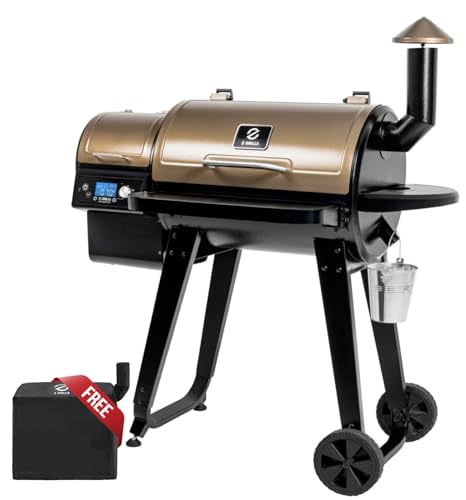
Best value: Z GRILLS ZPG-450A2 Wood Pellet Grill and Smoker, PID V3.0, 459 sq in
Best value
Z GRILLS ZPG-450A2 Wood Pellet Grill and Smoker, PID V3.0, 459 sq in
Z Grills
- Cooking area: 459 sq in
- Hopper capacity: Not listed
- Temp range: Not listed
- Controller: PID V3.0 with LCD, 1 meat probe
- Cooking racks: Not listed
- Build / material: Powder-coated steel, foldable shelf, wheels
Z Grills' 450A2 gives 459 sq in of cooking area with an auto-tuning PID V3.0 controller, an LCD and one meat probe, a foldable front/side shelf and a powder-coated steel body on wheels.
Last checked 2026-10-09
Best WiFi / smart: Ninja OG951 Woodfire Pro Connect Premium XL Outdoor Grill & Smoker, App Enabled

Best WiFi / smart
Ninja OG951 Woodfire Pro Connect Premium XL Outdoor Grill & Smoker, App Enabled
Ninja
- Cooking area: Approx 242 sq in (XL)
- Hopper capacity: Pellet scoop (no large hopper)
- Temp range: Approx 105-500°F
- Controller: Digital with WiFi/Bluetooth app + thermometer
- Cooking racks: 2
- Build / material: Steel with porcelain-enameled grates
The Ninja Woodfire Pro Connect Premium XL adds full app connectivity and a built-in thermometer for remote monitoring and alerts. It is the best WiFi/smart in-stock pick for tech-forward cooks.
Last checked 2026-10-09
What to buy alongside the grill
A grill is the start of a small, natural cart. Pellets, a cover and a probe thermometer come next — see the best pellets & accessories guide. On a tighter budget, the best affordable pellet grills guide covers the value end. Already weighing brands? The Traeger vs Pit Boss comparison sizes up the two ecosystems most first-time buyers consider. And the cook-capacity & hopper burn-time calculator tells you whether your grill can sleep through an overnight cook or will run dry.
Frequently asked questions
What is the best pellet smoker for most people?
For most backyard cooks, a mid-to-full-size pellet grill with roughly 550–900 square inches of grate area, a 18–20 lb hopper, and a PID controller. That tier feeds a family and a small crowd, holds steady low-and-slow temps, and carries enough pellets for most cooks without a midnight refill. Verified picks land on this page once real product data is in.
How much grate area (square inches) do I actually need?
It depends on what you cook for. As a rough guide: a couple or small family is fine around 450–600 sq in; a family that entertains wants 700–900 sq in; multiple briskets for a crowd points to 900-plus. The cook-capacity calculator turns your typical cook (briskets, racks of ribs, number of guests) into a required grate area so you do not buy too small.
How long does a hopper of pellets last?
A typical pellet grill burns roughly 1–3 lb of pellets per hour, scaling up with set temperature and cold ambient weather. So an 18 lb hopper might run 8–18 hours depending on conditions — but a cold winter night can push burn-rate to the high end and run a small hopper dry before a long brisket finishes. That is exactly the trap the hopper burn-time calculator is built to catch.
Does a bigger grill cost much more to run?
Not dramatically per cook — the main pellet cost is set temperature, ambient cold and cook length, not grate size. A bigger cabinet does take a little more to bring up to temp, but the difference is small next to the comfort of not running out of room (or hopper) mid-cook.
Is a compact or portable pellet grill enough for a beginner?
For a balcony, a small patio or tailgates, a compact pellet grill can be a great first cooker — it still holds low-and-slow temps. The honest limit is capacity: a small grate and a small hopper make a full-size brisket or a big crowd hard. If you mostly cook for two and value the footprint, compact is fine; if you see a crowd in your future, size up now.