Traeger vs Pit Boss
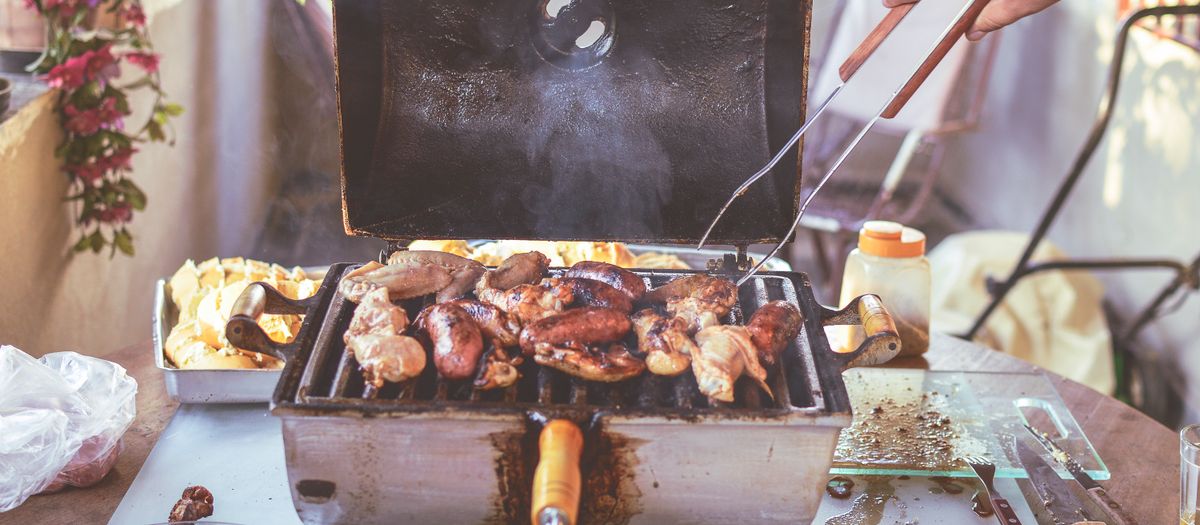
Traeger and Pit Boss are the two names most first-time buyers weigh up — and the honest answer is that it is a trade-off, not a knockout. Traeger tends to lead on the app ecosystem and accessory range; Pit Boss tends to give more grate area and sear ceiling per dollar. This guide compares the two ecosystems on the specs that decide the fit, then names the best pick from each brand. The verified picks appear in each slot once real product data is in.
The slots here are best Traeger, best Pit Boss, best budget Traeger, best budget Pit Boss and the strongest alternative from Camp Chef or Z Grills — so you can match the ecosystem to how you cook and what you want to spend.
Specs verified against manufacturer details and current Amazon listings — no hands-on testing claims. Grate area, hopper capacity and temp-range figures are taken from published manufacturer specs; estimates are derived from those specs and stated cook conditions.
How to decide between two good ecosystems
The Traeger-vs-Pit-Boss question is the one the guys in my BBQ group ask most, and the honest answer is that you are not choosing between a winner and a loser — you are choosing which set of trade-offs fits your backyard. Both brands make pellet grills that hold a steady 225°F and pull a good brisket. The difference is philosophy: Traeger sells a polished ecosystem — a mature app, a deep accessory range and a refined fit-and-finish — and asks a premium for it. Pit Boss sells more cooker per dollar — typically more grate area and a higher sear ceiling at a given price, and it goes on sale often. So the deciding question is simple: do you value the smoothest app and the biggest mod ecosystem, or the most grill for your money? Answer that and the rest follows.
App and WiFi control
This is Traeger's clearest edge. The WiFIRE app is generally the more mature, feature-rich ecosystem, with a large recipe library, reliable remote temperature control and the ability to watch and adjust an overnight cook from your phone. Pit Boss has closed the gap on its WiFi-enabled models and the core remote-control functions work, but the app is leaner and the ecosystem around it is smaller. If app experience is genuinely a deciding factor for you — and for some cooks, being able to check a 2am brisket without leaving bed truly is — Traeger is the safer bet today. If the app is a “nice if it works, fine if it does not” feature, it should not override the spec-and-price comparison.
Grate area and sear ceiling per dollar
This is where Pit Boss tends to win. At a given price, Pit Boss generally gives you more grate area and a higher maximum temperature than the comparable Traeger. The higher ceiling matters if you want to sear steaks as well as smoke low-and-slow — many Pit Boss models include direct-flame sear access for exactly that. More grate area, meanwhile, is the spec that decides how much you can cook at once, and buying it cheaply is real value: a brisket-plus-ribs cook needs the room, and paying less for it leaves budget for pellets, a cover and a thermometer. For pure spec-per-dollar, Pit Boss usually comes out ahead; what you trade for it is the app polish and the accessory ecosystem.
Controllers, build and hopper hours
Both brands' current grills use PID-style controllers that hold temperature far more tightly than a basic on/off controller, so on temp stability they are broadly comparable model-for-model — read the individual spec, not the badge. On build, Traeger's premium tends to show in fit-and-finish and sealing, which can help in wind and cold; Pit Boss build quality is solid for the money but you are buying capability over polish. Hopper hours come down to capacity and the cook, not the brand: spec-by-spec, a 20-lb hopper at 225°F runs roughly 12–18 hours in mild weather, and a cold winter night pushes the burn-rate up and shortens that window on either brand — so whichever logo you pick, size the hopper to the coldest overnight cook you will run and check it with the hopper burn-time calculator.
What about Camp Chef and Z Grills?
Traeger and Pit Boss are the two head terms, but they are not the only good answers — which is why there is an alternative slot. Camp Chef is known for genuinely useful engineering: an ash-cleanout system that makes maintenance quick and slide-and-grill direct-flame sear access for steaks. Z Grills is the value spoiler — it often undercuts both head brands while offering generous grate area and hopper capacity, making it a strong pick for a budget buyer who wants size. If a specific feature (ash cleanout, a particular sear setup) or a price point beats both Traeger and Pit Boss for your needs, the alternative is where it lands. The broader point: pick the ecosystem that fits your cooking, not the one with the most name recognition.
Timing a Pit Boss sale
Because Pit Boss leans on value, its grills go on sale frequently — and the discounts are real, especially around the big retail windows (late spring grilling season, Father's Day, Black Friday and the holidays). If budget is the deciding factor between an ecosystem you like and one you love, waiting for a Pit Boss sale can close the gap entirely. Traeger discounts more rarely and more modestly, so a flagship Traeger is usually closer to a fixed cost. The practical move is to settle on the right model and grate size first, then let timing decide the brand at the margin — never buy too small just because it is on sale, which is the classic deal-day trap.
Accessories and pellets across the two brands
One practical worry first-time buyers raise is lock-in: if I pick Traeger, am I stuck buying Traeger everything? Mostly, no. Pellets are interchangeable — any quality food-grade hardwood pellet works in any pellet grill regardless of the logo on the lid, so you are never tied to a brand's bags. Where fit matters is hardware: covers, upgrade grates, replacement hoppers and brand-mounted probes are sized to each brand's specific models, so those you buy to match. Traeger's larger accessory ecosystem is a genuine convenience here — there are simply more first-party and third-party mods built for Traeger dimensions — while Pit Boss has a solid but smaller range. None of this should override the spec-and-price decision, but if you love tinkering and modding, it is a point in Traeger's column. The universal cart — clean pellets, a fitted cover, a probe thermometer — is covered in the best pellets & accessories guide, and most of it fits whichever brand you choose.
Which one fits you?
Strip the debate down and it resolves into a few honest matches. Pick Traeger if the app and remote control genuinely matter to how you want to cook, if you value fit-and-finish and the largest mod ecosystem, and if you are comfortable paying a premium for polish. Pick Pit Boss if you want the most grill for your money, a higher sear ceiling for steaks, more grate area at a given price, and you are happy to time a sale. Look hard at a Camp Chef if quick ash cleanout and easy sear access appeal, or a Z Grills if you want generous size on a tight budget. Whatever the badge, the specs that actually decide your cooks are the same on every brand: enough grate area for your crowd, enough hopper hours for your longest cold-night cook, and a PID controller that holds temp. Match those three to your backyard first, and the brand becomes the easy part of the decision.
Support, parts and long-term ownership
A pellet grill is a multi-year purchase, so it is worth weighing the things that show up after the first cook. Both brands are widely sold and well supported, with readily available replacement parts — augers, igniters, controllers and fire pots are all serviceable items that wear over years of use, and keeping a grill running is far cheaper than replacing it. Traeger's larger dealer and accessory network can make sourcing parts and mods a little easier, while Pit Boss's value pricing extends to replacement components too. Whichever you pick, the maintenance that actually protects the investment is mundane and universal: keep the grill covered, vacuum the ash and fire pot regularly, store pellets dry, and run a periodic burn-off. A grill that is cleaned and covered outlasts the warranty on either brand — the badge matters far less than the upkeep.
Doneness and food safety
Whichever brand you cook on, doneness is decided by internal temperature, not by time, the app readout or how the meat looks. Cook all meats to a safe internal temperature verified with a probe thermometer and follow USDA safe-temperature guidance — poultry to 165°F, whole cuts of beef and pork to at least 145°F with a rest, with brisket and pork shoulder typically taken to around 195–205°F for tenderness. The grill's chamber probe (and the app) tells you the air temperature; a separate, accurate probe is what tells you the meat is done. When in doubt, probe it.
| Pick | Cooking area | Hopper | Temp range | Controller | Racks |
|---|---|---|---|---|---|
| Best Traeger pick | 780 sq in | 18 lb | Not listed | D2 controller with WiFIRE app | Not listed |
| Best Pit Boss pick | 932 sq in total | 30 lb with viewing window | 180–500°F | WiFi + Bluetooth LCD digital, 2 meat probes | Not listed |
| Best budget Traeger | 653 sq in (dual-tier) | 18 lb | 180–450°F | WiFIRE app-connected | 2-tier |
| Best budget Pit Boss | 518 sq in (2-tier) | Not listed | 180–500°F in 5°F increments | LCD digital, 2 probe ports (1 probe included) | 2-tier porcelain-coated steel |
| Best alternative (Camp Chef / Z Grills) | Standard Woodfire area | Pellet scoop (no large hopper) | Approx 105-500°F | Digital with built-in thermometer | 1-2 |
Our top picks
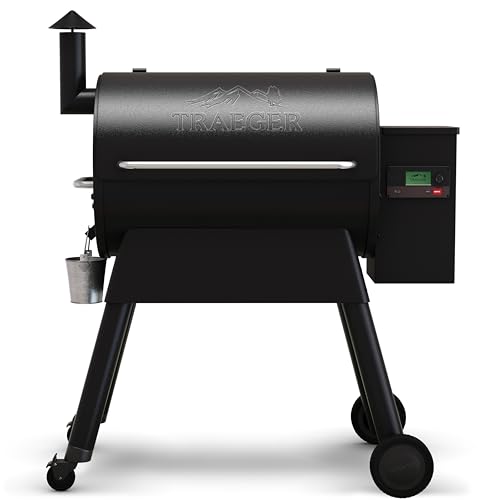
Best Traeger pick: Traeger Pro 780 Wood Pellet Grill and Smoker, 780 sq in, WiFi
Best Traeger pick
Traeger Pro 780 Wood Pellet Grill and Smoker, 780 sq in, WiFi
Traeger
- Cooking area: 780 sq in
- Hopper capacity: 18 lb
- Temp range: Not listed
- Controller: D2 controller with WiFIRE app
- Cooking racks: Not listed
- Build / material: Powder-coated steel, heavy-duty wheels
Traeger's Pro 780 pairs 780 sq in of cooking space with WiFIRE app control, the D2 drivetrain controller with TurboTemp, an included meat probe and an 18 lb hopper on a powder-coated steel body.
Last checked 2026-10-09
Best Pit Boss pick: Pit Boss 850 Navigator Series WiFi and Bluetooth Wood Pellet Grill and Smoker

Best Pit Boss pick
Pit Boss 850 Navigator Series WiFi and Bluetooth Wood Pellet Grill and Smoker
Pit Boss
- Cooking area: 932 sq in total
- Hopper capacity: 30 lb with viewing window
- Temp range: 180–500°F
- Controller: WiFi + Bluetooth LCD digital, 2 meat probes
- Cooking racks: Not listed
- Build / material: Steel with flame broiler
Pit Boss's 850 Navigator offers 932 sq in of total cooking surface, a 30 lb hopper with viewing window, WiFi and Bluetooth control with two meat probes, a flame broiler and a 180–500°F range.
Last checked 2026-10-09
Best budget Traeger: Traeger Westwood Wood Pellet Grill and Smoker, 653 sq in, WiFi

Best budget Traeger
Traeger Westwood Wood Pellet Grill and Smoker, 653 sq in, WiFi
Traeger
- Cooking area: 653 sq in (dual-tier)
- Hopper capacity: 18 lb
- Temp range: 180–450°F
- Controller: WiFIRE app-connected
- Cooking racks: 2-tier
- Build / material: Premium steel, side shelf, P.A.L. rail
The Westwood is Traeger's beginner-friendly WiFIRE grill: 653 sq in across two tiers, an 18 lb hopper, a 180–450°F range for low-and-slow or seared cooks, and a side shelf with P.A.L. rail accessories.
Last checked 2026-10-09
Best budget Pit Boss: Pit Boss 500 FB2 Series Wood Pellet Grill and Smoker, 518 sq in

Best budget Pit Boss
Pit Boss 500 FB2 Series Wood Pellet Grill and Smoker, 518 sq in
Pit Boss
- Cooking area: 518 sq in (2-tier)
- Hopper capacity: Not listed
- Temp range: 180–500°F in 5°F increments
- Controller: LCD digital, 2 probe ports (1 probe included)
- Cooking racks: 2-tier porcelain-coated steel
- Build / material: Steel with flame broiler and bottom shelf
Pit Boss's 500 FB2 is an 8-in-1 pellet grill with 518 sq in on two porcelain-coated tiers, an LCD controller running 180–500°F in 5°F steps, two probe ports (one probe included), a flame broiler and a bottom storage shelf.
Last checked 2026-10-09
Best alternative (Camp Chef / Z Grills): Ninja OG751 Woodfire Pro Outdoor Grill & Smoker with Built-In Thermometer

Best alternative (Camp Chef / Z Grills)
Ninja OG751 Woodfire Pro Outdoor Grill & Smoker with Built-In Thermometer
Ninja
- Cooking area: Standard Woodfire area
- Hopper capacity: Pellet scoop (no large hopper)
- Temp range: Approx 105-500°F
- Controller: Digital with built-in thermometer
- Cooking racks: 1-2
- Build / material: Steel with porcelain-enameled grate
With Traeger and Pit Boss sold off-Amazon, the Ninja Woodfire Pro is the standout in-stock alternative — a versatile grill, smoker, and air fryer with a built-in thermometer. It is the best alternative-brand pick buyable on amazon.com.
Last checked 2026-10-09
What to buy alongside the grill
Whichever ecosystem you pick, the cart that follows is the same: pellets, a cover and a probe thermometer — see best pellets & accessories. Still settling on size? The best pellet smokers by size guide matches grate area and hopper hours to your crowd. On a tighter budget, the best affordable pellet grills guide covers the value end. And the cook-capacity & hopper burn-time calculator checks whether your chosen model can sleep through an overnight cook.
Frequently asked questions
Is Traeger or Pit Boss better?
Neither is a clear winner — it is a trade-off. Traeger tends to lead on the app ecosystem, accessory range and polish; Pit Boss tends to give more grate area and a higher sear ceiling per dollar. If you value the smoothest app and the biggest mod ecosystem, lean Traeger; if you want the most cooker for the money, lean Pit Boss. Verified picks land on this page once real product data is in.
Which has the better app and WiFi control?
Traeger's WiFIRE app is generally the more mature and feature-rich ecosystem, with a large recipe library and reliable remote control. Pit Boss has closed the gap on WiFi-enabled models, but its app is leaner. If app experience is a deciding factor for you, Traeger is the safer bet today.
Which brand gives more grill for the money?
Pit Boss generally offers more grate area and a higher max temperature (better for searing) at a given price, and it goes on sale often. Traeger asks a premium for its ecosystem and build. For pure spec-per-dollar, Pit Boss usually wins; for the ecosystem, Traeger.
What about Camp Chef and Z Grills?
Both are strong alternatives. Camp Chef is known for its ash-cleanout system and slide-and-grill sear access; Z Grills is known for high value, with lots of grate and hopper for the price. If a specific feature or price point beats both head brands for your needs, the alternative slot on this page is where it lands.
Do accessories and pellets carry across brands?
Most pellets are interchangeable — any quality food-grade hardwood pellet works in any pellet grill. Brand-specific accessories (covers, grates, hoppers, probes) are sized to each brand's models, so check fit before you buy. The accessories guide covers the parts that fit across ecosystems.