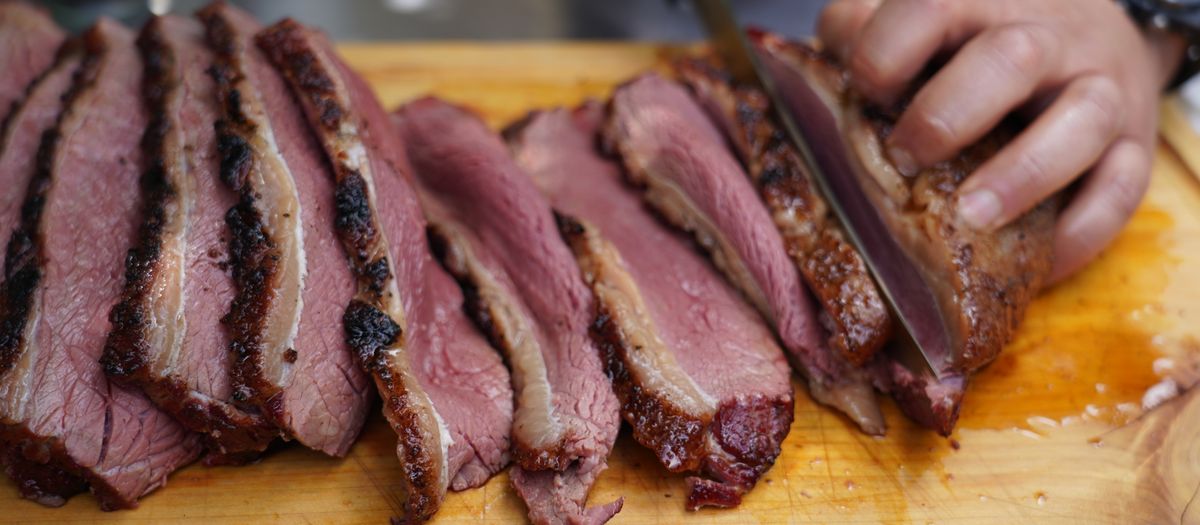
People treat low-and-slow versus hot-and-fast like a religious debate, and it isn’t one. They’re two different tools for two different jobs. Knowing when to reach for each is one of those things that quietly separates a frustrating first season from an enjoyable one. Here’s how I think about it after years at the grill.
What each one actually means
Low-and-slow is what most people picture when they think “smoking” — running the grill at a low temperature, roughly 225–275°F, for a long time. The slow heat gives tough, fatty cuts time to break down their connective tissue into gelatin, and gives smoke time to do its work. This is brisket, pork shoulder, ribs — the big, forgiving cuts.
Hot-and-fast is exactly what it sounds like — running higher, often 300–375°F or more, to cook quicker. You trade some of the slow-rendered tenderness and bark development for speed. It’s how you cook chicken, smaller cuts, weeknight dinners, and how you finish things when time is short.
Neither is “real barbecue” and the other isn’t. They’re just different settings for different goals.
The stall, and why low-and-slow takes patience
If you go low-and-slow on a big cut, you’ll meet the stall — the point where the internal temperature plateaus for what feels like forever as moisture evaporates off the surface and cools the meat. Beginners panic here and crank the heat or assume something’s broken. Nothing’s broken. The stall is normal. You either wait it out or wrap the meat (the “Texas crutch”) to push through it.
The reason I mention it under this topic is that the stall is the single biggest reason people give up on low-and-slow and decide hot-and-fast is “better.” It’s not better — they just hit the stall, didn’t know what it was, and got impatient. Knowing it’s coming makes low-and-slow far less stressful.
How I decide which to use
My honest decision process:
- Big, tough, fatty cut + time to spare? Low-and-slow. Brisket, pork shoulder, beef ribs — they reward patience and punish a rush.
- Smaller cut, poultry, or a weeknight? Hot-and-fast. Chicken especially does better at a higher temp for crispier skin, and you’re not trying to render a lot of connective tissue.
- Want bark and smoke flavour? Lean low-and-slow; the longer time builds more bark and takes on more smoke.
- Short on time but still want smoke? A higher-temp cook still picks up real flavour on a pellet grill — you just get less of the slow-rendered character.
A lot of my cooks are actually a blend: smoke low for flavour and bark, then bump the heat to finish or to crisp skin. The dial isn’t a loyalty test.
The hybrid cook is my real answer
In practice, the way I cook most big cuts isn’t purely one or the other — it’s a blend, and I think that’s the honest answer most experienced cooks land on. I’ll start low, around 225–250°F, to build bark and let the meat take on smoke through the early hours when it absorbs the most. Then, once I’m through the stall and chasing the finish, I’ll often bump the temp up to push the last stretch and get dinner on the table at a sane hour.
Poultry I treat almost the opposite way: I’ll lean a bit hotter for crisper skin, because low-and-slow poultry can end up with rubbery skin that nobody enjoys. The point is that the temperature dial is a tool you adjust through the cook, not a flag you plant at the start. Once you stop thinking of it as a loyalty test, you start using the whole range to get the result you actually want.
Don’t let the debate stress you out
If you’re new, the low-and-slow-versus-hot-and-fast talk online can make it feel like there’s a right answer you’re failing to find. There isn’t. Start with forgiving cuts at a steady low temp, get comfortable reading internal temps with a probe, and let yourself experiment with finishing hotter once you’ve got the basics. The cooks that go wrong almost never go wrong because someone picked the “wrong” method — they go wrong because the grill was too small, the hopper ran dry, or the cook trusted the clock instead of the probe. Get those right and either method makes great food.
Why pellet grills love the low end
Here’s the thing worth knowing when you buy: a pellet grill is happiest, and most differentiated, at the low-and-slow end. Holding a rock-steady 225°F for twelve hours, hands-off, is the thing pellet grills do better than almost anything else. That’s also where a steady controller and enough hopper matter most — a long low cook is exactly where a small hopper runs dry and a swingy controller shows its flaws.
So when you size and choose a grill, size it for the low-and-slow cooks, because those are the demanding ones. Get a grill that holds a steady low temp with hopper to spare, and hot-and-fast takes care of itself. That’s the lens I use in the best pellet smokers by size guide — grate, hopper and steady low-temp control first, because the long cook is the one that tests the grill.
Use low-and-slow for the big cuts and the bark, hot-and-fast for speed and skin, and don’t let anyone tell you one is more legitimate than the other. They’re both just cooking.
This is my own backyard experience, not a lab test. Always cook to a safe internal temperature with a probe thermometer, following USDA safe-temperature guidance — internal temp decides doneness, not time or appearance.