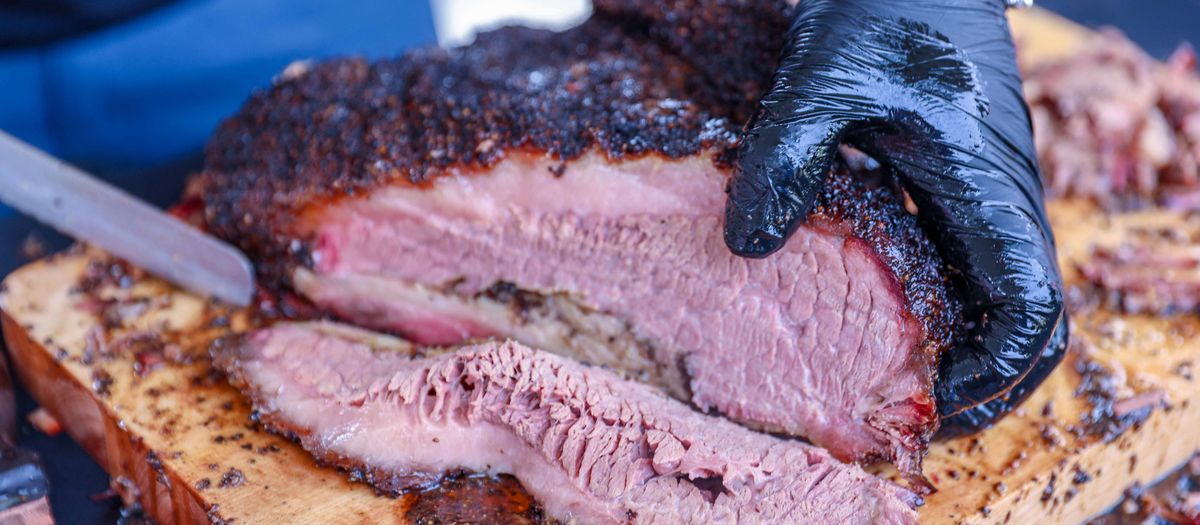
I want to tell you about the worst cook I ever ran, because it’s the reason this whole site exists. It was a cold night in late winter, the first time I tried an overnight brisket on my first pellet grill, and I woke up at 3am to a dead grill, a stone-cold firepot and a brisket that was never going to recover. I’d done everything by the book except the one thing nobody had told me mattered most: I’d bought a grill that was too small for the cook I wanted to run.
The deal that looked too good to pass up
My first pellet grill came off a holiday-weekend sale. The price was great, the photos looked the part, and I was new enough that I genuinely thought a grill was a grill. I didn’t look at grate area. I didn’t think about the hopper at all — I didn’t even know hopper capacity was a number you were supposed to care about. I saw a discount and a shiny lid and I bought it.
That’s the trap, and I fell straight into it. The headline price is the one number every grill shouts at you, and it’s close to the least important one for a long cook. Grate area decides how much you can fit. Hopper capacity decides how long you can go before you have to feed it more pellets. Neither of those was on my radar.
Why a cold night eats pellets
Here’s the part that genuinely surprised me. A pellet grill holds temperature by burning more pellets when it’s losing heat to the outside. On a mild afternoon, my little grill sipped pellets. On a cold winter night, with the wind moving and the ambient temp down low, it had to work much harder to hold 225°F — so it burned through pellets far faster than I expected.
I’d loaded the hopper before bed and figured that was plenty. It wasn’t close. Cold ambient temperature pushes burn-rate way up, and a small hopper that might last all day in summer can empty out in a handful of hours on a cold night. I learned that the hard way, asleep, while my fire quietly went out.
3am, a dead grill, and a cold brisket
I’d set an alarm to check the temp, and when I stumbled out in the cold the readout was wrong in the worst way — far too low. The hopper was empty. The firepot had burned out. The brisket sat there at a temperature that meant it had spent hours in the danger zone, and there was no saving it. You can’t restart a stalled overnight cook on a piece of meat that’s been sitting cold for who-knows-how-long. I threw it out. That one hurt.
What that night actually taught me
The lesson wasn’t “buy the expensive grill.” It was much more specific than that:
- Grate area has to fit the cook you actually run, not the one on the box.
- Hopper capacity has to last your longest cook — with margin.
- Ambient temperature changes everything; a cold night can double your burn-rate and run a small hopper dry before morning.
Those three things — grate, hopper, and the weather — decide whether a long cook survives. The headline price tells you almost nothing about any of them.
The cheaper grill wasn’t even the problem
Here’s the part that took me a while to accept: the grill itself wasn’t junk. It held temperature fine on a mild afternoon. It cooked a great weeknight chicken. The problem was never quality — it was that I’d bought it for a cook it was never sized to do. A small-hopper grill is a perfectly good grill for short cooks in fair weather. I just asked it to run an overnight brisket on a cold night, which is the one thing its little hopper couldn’t survive.
That reframing matters, because the lesson isn’t “spend more.” It’s “match the grill to the cook you’ll actually run.” If I’d only ever cooked weeknight dinners, that grill would have served me for years and I’d have no complaints. I bought the wrong tool for my ambitions, on price alone, without knowing which numbers actually mattered.
How I’d have caught it beforehand
If I could go back, the fix would have taken five minutes. Before buying, I’d have written down my dream cook — an overnight brisket in winter — and asked two questions of any grill I was considering: does the grate fit it, and will the hopper last it in the cold? The first is on the spec sheet. The second is simple math: pounds of pellets per hour times the cook length, against the hopper size, with the burn-rate pushed up for cold weather. Either the hopper covers the cook with margin, or it doesn’t and I plan a refill or buy bigger. That five-minute check would have saved me a brisket, a sleepless night, and a fair bit of pride.
Why I built the calculator
After that night I started doing the math by hand before every long cook: how many pounds of pellets per hour, how many hours in the hopper, will it make it. Eventually I turned that math into a tool so nobody else has to do it on a notepad at midnight. If you’ve got a long cook coming up, run it through the best pellet smokers by size guide first so you’re starting with enough grill — and then check whether your hopper will make it through the night before you ever light it.
Nobody should wake up at 3am to a dead grill and a wasted brisket. That’s the whole reason Smoke & Grate is here.
This is my own backyard experience, not a lab test of any particular grill. Always cook to a safe internal temperature verified with a probe thermometer, following USDA safe-temperature guidance — doneness is decided by internal temp, not by time.