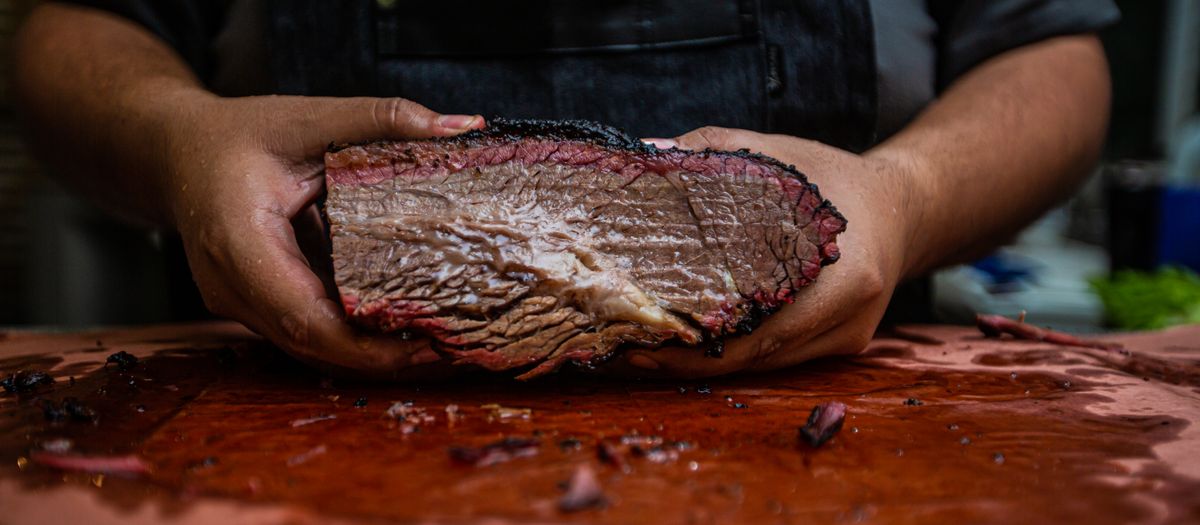
I live in the Kansas City suburbs, where winter is a real season, and most of what’s written about pellet grilling quietly assumes a mild afternoon. So let me fill the gap. Cooking in the cold is absolutely doable — I do it all the time — but it’s harder than the sunny videos make it look, and the differences are exactly the kind that ruin a cook if you don’t plan for them. This is the honest version.
Cold weather eats pellets — a lot
This is the big one, and it’s the lesson that started this whole site. A pellet grill holds temperature by burning more fuel when it’s losing heat to the outside. On a cold, windy night it’s fighting a much bigger temperature gap, so it burns through pellets far faster than it would on a mild day. Your nice summer burn-rate can climb dramatically.
The practical danger is the hopper running dry mid-cook. The first overnight brisket I ever tried was on a cold winter night, and the hopper that I assumed was “plenty” emptied out around 3am. The fire went out, the brisket was ruined, and I learned that ambient temperature is a first-class variable, not a footnote. Before any cold-weather long cook now, I run it through the cook-capacity and hopper burn-time calculator to check whether the hopper will actually make it before I commit.
Recovery after you open the lid is slower
In the cold, every time you open the lid you dump a lot of heat, and the grill takes noticeably longer to climb back to temperature than it would in summer. So the old rule — “if you’re lookin’, you ain’t cookin’” — matters more in winter. I plan my peeks, do what I need to in one go, and close the lid. Each unnecessary open in the cold is real time and real pellets.
Condensation and a colder cooking environment
A couple of smaller realities worth knowing. Cold metal plus warm, moist smoke means more condensation inside the grill and on the food early in the cook. It’s harmless, but it can surprise you. And the whole cooking environment is simply colder, so things genuinely take longer — your summer timing won’t carry over.
How I actually cook in the cold
None of this stops me; it just changes how I prep:
- Load extra pellets and keep more on hand. Assume a higher burn-rate and plan a refill if the math is tight, rather than hoping.
- Block the wind. Wind is worse than still cold air. Positioning the grill out of the wind makes a real difference to how hard it has to work.
- Open the lid less, and plan each open. Slower recovery means each peek costs more.
- Give yourself a bigger time buffer. Cold cooks run long; start earlier and lean on the rest.
- Trust the probe, not the clock. Cold weather throws timing off, so internal temperature is the only honest measure of doneness.
A few people swear by insulation blankets for very cold climates. I won’t make a product call here, but the principle is sound: anything that helps the grill lose less heat means a lower burn-rate and steadier temps in the cold.
What about the controller and the electronics?
A question I get every winter: does the cold hurt the grill itself? In my experience the cooking electronics handle cold fine while they’re running — the firepot is putting out plenty of heat. The thing I’m more careful about is the pellets and the auger. Cold, damp air is exactly the condition that lets pellets in the hopper absorb moisture overnight, and damp pellets jam an auger and make your temp erratic. So in winter I’m even stricter about emptying the hopper back into a sealed bucket after every cook, and loading fresh dry pellets each time. A jammed auger on a freezing morning is a miserable way to learn this.
The other small thing: give the grill a little longer to come up to temperature at the start of a cold cook. It’s working against a bigger temperature gap, so the climb to 225°F takes longer than it does in summer. Build that into your start time so you’re not waiting on the grill while your prep sits out.
A realistic winter timeline
Here’s roughly how I plan a cold-weather brisket so nothing surprises me. I check the cook through the calculator the night before and make sure I’ve got more than enough pellets on hand. I position the grill out of the wind. I start earlier than I would in summer, because both the warm-up and the cook itself run longer. I peek as little as possible. And I lean hard on internal temp and a generous rest, because cold-weather timing is the least reliable timing there is. The cook still works beautifully — it just needs more margin than a July afternoon does.
Cold cooks are some of the best
Honestly, a brisket pulled off the grill on a cold, crisp day is one of my favourite things. The cold isn’t the enemy — being unprepared for it is. Plan for the higher burn-rate, protect the grill from the wind, peek less, and cook to internal temp. Do that and winter becomes just another season at the grill instead of the night your hopper runs dry.
This is my own backyard experience in a four-season climate, not a lab test. Always cook to a safe internal temperature with a probe thermometer, following USDA safe-temperature guidance — and never judge a cold-weather cook by time alone.